
Emergency
What to Do After Water Damage: The First 24 Hours
Updated
Short answer
After water damage, get to safety first, stop the water if you can do it safely, document everything with photos, remove small valuables, and start drying within 24 to 48 hours. Larger or contaminated losses should be handled by a restoration professional.
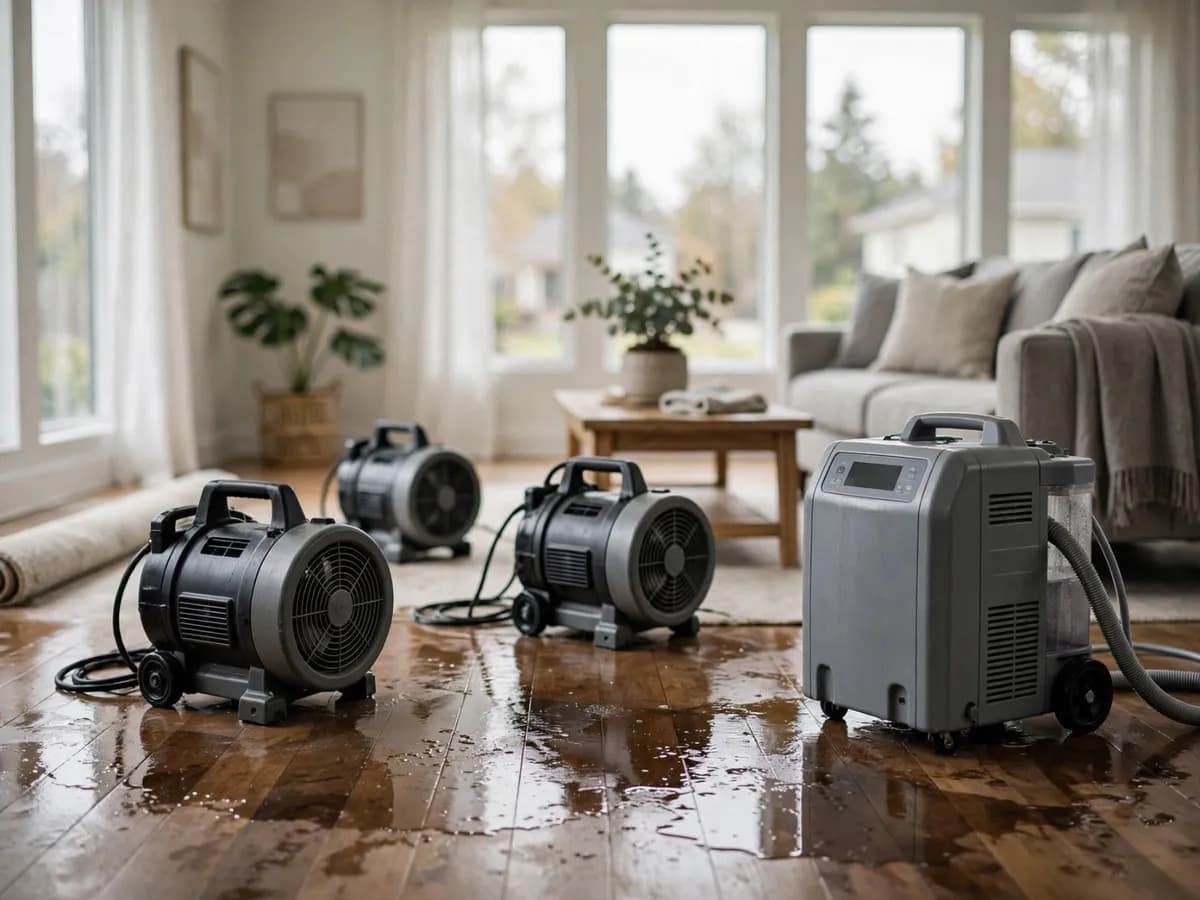
1. Make the area safe
Water and electricity together are the biggest immediate risk. If water is near outlets, cords, appliances or the electrical panel, stay out of the area. Only shut off power at the panel if you can reach it while standing on dry ground.
Watch for sagging ceilings, and keep people and pets away from any water that may contain sewage.
2. Stop the water
For plumbing leaks, close the fixture valve or the main water shutoff. For roof leaks, wait until the weather clears; do not climb on a wet roof.
3. Document before you clean
Take wide photos of each room, then close-ups of damaged items and the source. Video with narration helps. Keep receipts for anything you buy.
4. Remove what you safely can
Move small valuables, electronics, documents and rugs to a dry area. Put foil or wood blocks under furniture legs on wet carpet.
5. Start drying fast
Drying within the first day or two limits how far water travels into materials. For anything beyond a small, clean spill, professional extraction and drying equipment usually make a significant difference.
Moisture that remains in building materials can increase the risk of microbial growth, so prompt drying can matter.
6. Contact your insurer when appropriate
Coverage depends on the policy, cause of loss, exclusions and circumstances. Document the damage and contact your insurer when appropriate.
Separate the source problem from the building damage
Make two lists: what is still allowing water in, and which rooms or materials became wet. A plumber or roof contractor may address the first list while our restoration team assesses the second. Stopping the visible leak does not establish that the wall or floor assembly has dried.
When you call, explain the source if known, when you discovered it, which floors are involved and any access hazard. If the source is uncertain, say so; an assumption about clean supply water can change important cleanup decisions.
Keep a simple room-by-room record
For each affected room, note the visible water path, wet surfaces and nearby concealed spaces. Keep dated photographs together with the technician's findings. Before repairs hide the damaged area, ask which readings or observations support the decision to retain those materials.
Do this now
- Get people and pets to safety
- Avoid water near electricity
- Shut off the water source if safe
- Photograph and video the damage
- Move valuables to a dry area
- Call for help with extraction and drying
When to call a professional
- Water covers more than one small area
- Water came from sewage or flooding
- Water is in walls, ceilings or under flooring
- You cannot stop the source
Related services
Frequently asked questions
How soon should drying start after water damage?
As soon as possible. Starting within 24 to 48 hours generally limits damage to building materials.
Should I throw away wet items?
Not before documenting them. Porous items exposed to sewage or flood water are usually discarded; items wet with clean water may be salvageable.