
Drying
How Long Does Water Damage Take to Dry?
Updated
Short answer
With professional equipment, many residential water losses dry in about three to five days. Dense materials, hardwood, concrete, wall cavities and humid weather can extend that. Drying is complete when moisture readings match unaffected materials — not when surfaces feel dry.
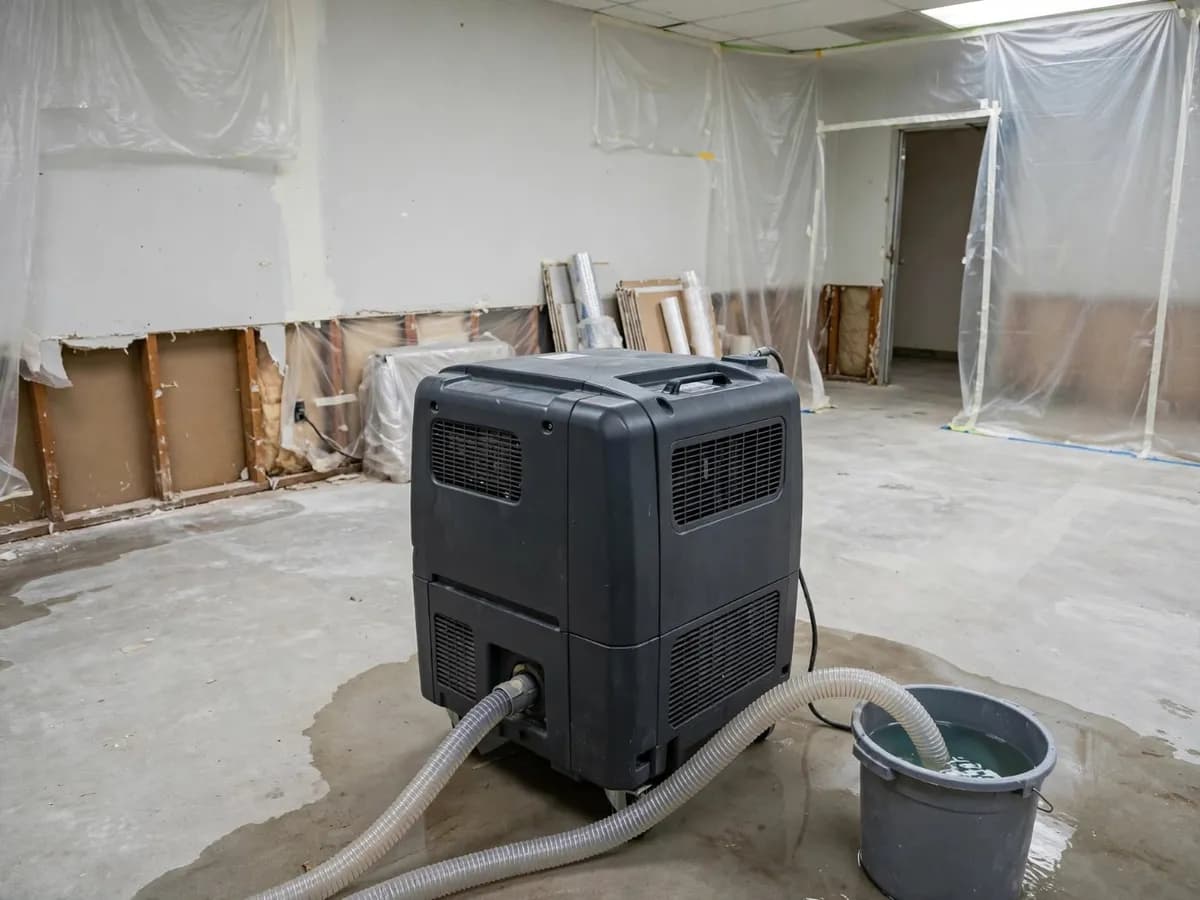
What speeds drying up
Fast extraction, enough dehumidification, good airflow and warm temperatures all help.
What slows it down
Hardwood, plaster, concrete, insulation behind walls, cabinets and high outdoor humidity can add days.
How "dry" is measured
Professionals take readings in wet materials and compare them to the same material in an unaffected area. Drying continues until they match.
Drying on your own
Fans alone can push moisture around. Without dehumidification, materials may stay damp much longer.
Why a room can feel dry before the assembly is ready
A room's air, the finish surface and the material beneath it can reach different moisture conditions. A floor may look normal while the subfloor remains affected. Ask the technician which materials are being measured rather than using the room's comfort or a single visible surface as the completion test.
Drying time is a planning range, not an appointment for rebuilding. Source control, access to wet layers and the condition of the materials can change the plan after equipment starts operating.
Questions to ask at the final drying visit
Ask where readings were taken, what comparison supports the dry standard and whether any inaccessible areas remain. Keep the final moisture record and the repair list. If a floor or wall contractor has installation requirements, coordinate those before finishes cover the monitored area.
Typical drying times by situation
Every building is different, but these ranges show what usually drives the timeline once professional equipment is running:
- A small clean-water leak caught the same day, limited to one room: often about 2 to 3 days.
- Carpet, pad and drywall in several rooms: commonly 3 to 5 days.
- Hardwood floors, plaster or dense materials: can take a week or more, because these release moisture slowly.
- Basements and crawl spaces with poor airflow: often longer, depending on humidity and ventilation.
What speeds drying up and what slows it down
Drying depends on airflow over wet surfaces, low humidity in the room and warmth. Our crews balance air movers and dehumidifiers to the size of the area and adjust them daily based on readings. Closed-cell materials, vinyl flooring over a wet subfloor and cabinets that trap water slow things down, and sometimes a small access hole or toe-kick removal is the fastest path to dry.
Turning off the air conditioning, opening windows on a humid day or moving equipment can all add days. Leave the equipment running where it is placed and let us know if anything trips a breaker.
Do this now
- Keep equipment running until told otherwise
- Keep doors open as directed
- Do not close walls or install flooring until readings are normal
When to call a professional
- Water is in walls or under floors
- Drying has stalled
- Musty odor develops
Related services
Frequently asked questions
Can I turn the equipment off at night?
Generally no. Drying equipment is designed to run continuously. Ask your technician before turning anything off.