
Prevention
Sump Pump Failure: What to Do When the Basement Floods
Updated
Short answer
If a sump pump stops during rain, check that it has power, that the float is not stuck and that the discharge line is clear — but only if you can reach it without standing in water near electricity. Then remove water and dry the basement promptly.
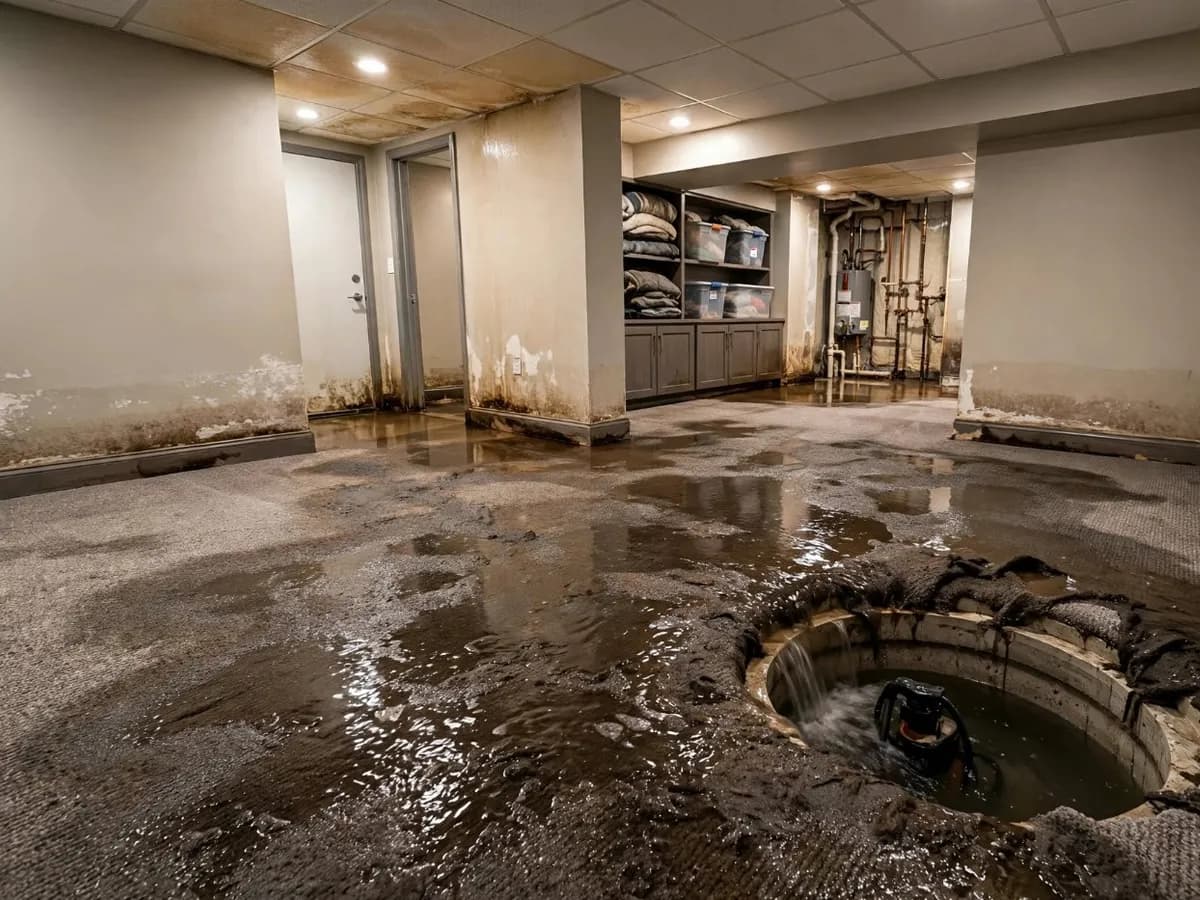
Common reasons pumps fail
Power outages, stuck floats, clogged intakes, frozen or blocked discharge lines, undersized pumps and age.
During a failure
Keep clear of water near outlets. If the pump is plugged into a submerged outlet, do not touch it.
Prevention
Test the pump before rainy seasons, consider battery backup, keep the discharge line clear and extend downspouts away from the foundation.
Separate pump operation from discharge performance
A motor running does not prove that water is leaving through the intended outlet. Report whether the pit fills, whether the pump cycles and whether there are visible discharge problems, without approaching energized equipment in standing water.
Ask the installer to consider the collection pit, pump, power supply, check valve and discharge route as a system. A replacement pump alone may not address a restriction elsewhere in that system.
Make the next test repeatable
Request a safe operating demonstration and instructions suited to the installed system. Record how any alarm or backup is checked and who maintains it. If the failure flooded finished rooms, arrange a separate building-material assessment rather than treating pump operation as drying completion.
The most common reasons a sump pump fails
Knowing the cause matters because a plumber fixes the pump while our team deals with the water it let in. Tell us what you saw so we can plan extraction and drying around the basement's layout.
- Power outage during a storm, when the pump is needed most. A battery backup or water-powered backup pump covers this gap.
- A stuck float switch, often caught on the pit wall or the pump's own cord.
- An undersized pump that cannot keep up with heavy inflow.
- A clogged or frozen discharge line, or a missing check valve that lets water flow back into the pit.
- Age. Many pumps need replacement after several years of regular cycling.
What basement cleanup after pump failure involves
We extract standing water first, then check finished walls, carpet, pad and stored items. Water that entered through the pit or foundation is groundwater and is usually treated as more contaminated than clean supply water, which affects what can be kept. Drywall is often cut above the water line so the wall cavity can dry, and dehumidifiers run until readings reach the dry standard.
To prevent a repeat, test the pump each season by pouring water into the pit, keep the discharge line clear and consider a high-water alarm.
Do this now
- Test before storm season
- Consider a battery backup
- Clear the discharge line
- Extend downspouts
When to call a professional
- Water spread across a finished basement
- Water is near electrical equipment
Related services
Frequently asked questions
How long do sump pumps last?
Lifespan varies by model and use. Regular testing is the best way to catch a failing pump.